

Buddha teaching : ค้นหาหนังสือธรรมะ หน้า 6 / 34
หน้าหนังสือทั้งหมด
75
Dhammakāya and the Previous Buddha
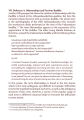
VII. Reference 4: Dhammakāya and Previous Buddha
Another Pāli passage that shows the relation of dhammakāya with the Buddha is found in the Atthasandassakathera-apadāna. But here the narrative relates
บทความนี้วิเคราะห์ความสัมพันธ์ของคำว่า Dhammakāya กับพระพุทธเจ้าในพระอัฏฐสังคษา โดยมีการเล่าถึงชีวิตของพระอรหันต์ Atthasandassaka ที่มีความคิดถึงพระพุทธเจ้า Padumuttara และการยกย่องพระพุทธเจ้าในบทกวีส
101
Understanding the Pāli Verses and Buddhist Doctrine
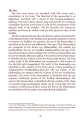
The Text
The first nine leaves are inscribed with Pāli verses and a commentary in Tai Yuan.4 The final leaf of the manuscript is an addendum, inscribed with a stanza of the Dvatiṃsa-mahāpuruśa-lakkhaṇ
The manuscript presents Pāli verses and commentary in Tai Yuan, summarizing Buddhist doctrines about the Buddha's physical body and wisdom. It includes thirty stanzas highlighting qualities like divin
106
Meetings with a Dhammakaya Master
Meetings with a Dhammakaya Master
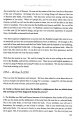
discovered the Law of Kamma. He was not the creator of the Law, but the re-discoverer of the Law of Kamma. All beings who do evil or wrong things will discover the L
In this enlightening session, the Dhammakaya Master discusses the Law of Kamma as a re-discovery, guiding individuals to see their actions' consequences through meditation. The Buddha's enlightenment
111
The Path to Self-Development and Ethical Living
Suzanne Jeffrey
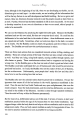
tions, although in the beginning of our life, when we are developing our habits, our six
directions give us total input - in other words, we are in-taking all the information that
wil
This text discusses the importance of self-development through six directions, emphasizing the role of ethical living and the teachings of Buddha in understanding one's mind and actions. It highlights
37
The First Monk Ordained by the Buddha: Kondanna
The first monk ordained by the Buddha personally, was Kondanna. He was the first of Lord Buddha's disciples, and Buddhism's first monk. He was ordained following Lord Buddha's first Sermon entitled th
The first monk ordained by the Buddha, Kondanna, was the first disciple who became a Stream-enterer after the Buddha's first sermon in Isipatana. This sermon allowed him to see the Dhamma. The Buddha
58
Chanting and Meditating in Buddhism
4. Chanting and Meditating
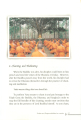
When the Buddha was alive, his disciples could listen to him preach and extol the virtues of the Dhamma everyday. However, after the Buddha passed away from this world, his
After the Buddha's passing, his disciples engaged in chanting and meditation to keep the teachings of Dhamma alive. Vatta involves chanting in homage to the Triple Gem: the Buddha, the Dhamma, and the
16
The Tale of the Trapped Monks
14
2 Story of Three Groups of Persons
A group of seven monks also went to pay homage to the Buddha.
On the way, they enquired at a monastery and they were directed to a cave, and there they spent the
This tale narrates the experience of seven monks who spent a night in a cave and were trapped for seven days after a boulder blocked the entrance. They were eventually freed and sought the Buddha's wi
48
The Story of Mattakundali
46 Clear-minded Youths - 5 The Story of Mattakundali
On that morning, the Buddha arising early from his deep meditation of compassion saw, in his Net of Knowledge, Mattakundali lying on the verandah.
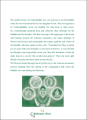
In this narrative, the Buddha notices Mattakundali, a weak youth, during his morning alms round. Despite his frail condition, Mattakundali expresses faith in the Buddha mentally. Upon passing, he is r
56
Invitation to the Buddha
The mother-in-law of Culasubhadha was very anxious to see the Buddha when she was told about him by her daughter-in-law. She even agreed to let Culasubhadha invite the Buddha for alms-food to their ho
Culasubhadha's mother-in-law eagerly anticipates an audience with the Buddha after hearing about his virtues. In a heartfelt gesture, Culasubhadha prepares offerings for him and invites him to their h
68
The Transformation of a Hunter's Heart
When her husband heard her words, he thought, 'This must be my
father-in-law', and her sons thought, 'This must be our grandfather'; and
thoughts of loving-kindness came into them. Then the lady said
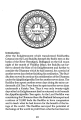
This narrative explores how the Buddha's teachings transformed the thoughts of a hunter and his family. When the hunter's wife urged compassion, thoughts of loving-kindness emerged in the minds of the
20
The Journey of Enlightenment: The Buddha's Reflections
1
Overview
Introduction
After the Enlightenment which transformed Siddhartha Gotama into the Lord Buddha beneath the Bodhi tree on the banks of the River Nerañjāra, Bodhgavā on the full moon night of
After achieving Enlightenment under the Bodhi tree, the Buddha spent 28 days in contemplation to absorb the bliss and understand the Dhamma. With encouragement from Brahmā Sahampati, he decided to sha
151
The Tale of the Ogres and the Boy
ogre said to the other that they ought to eat the boy up,
but the other ogre forbade him. The False View ogre ig-
nored the warning and grabbed the boy’s feet, waking
him. The boy was startled and exc
In this tale, two ogres discuss eating a boy but are interrupted when the boy wakes. The True View ogre insists they help him instead. They transform into the boy's parents to bring him food and leave
65
Dhammakaya Temple: A Community of Peace and Meditation
The Dhammakaya Temple is more than just temple buildings. It is a community that exemplifies a culture of peace and non-violence where meditation comes first and material concerns come last.
Establis
The Dhammakaya Temple, established on February 20, 1970, embodies a culture of peace and meditation, prioritizing spiritual growth over material concerns. It features the largest meditation hall, capa
87
The Cycle of Existence and Three Spheres
suffering completely, with no more attachment for the Three Spheres¹. Put another way, their practice entails extinguishing the three sorts of craving which keep them prisoner in the thirty-one realms
This text discusses the concept of craving as the root cause of rebirth in the Cycle of Existence, using a story from the Dhammapadathakā to illustrate the journey of a female piglet that was reborn m

68
จดหมายถึงน้องเล็ก
จดหมาย
ถึงน่องเล็ก
น้องเล็กที่รัก
น้องเล็กคงยังจำคุณกุหลาบ เพื่อนชาวอเมริกันของพี่ได้นะจ๊ะ พี่ชวนเธอตั้งแต่เดือน
มกราคม ให้ไปร่วมงานมาฆบูชาที่วัดพระธรรมกายด้วย เธอก็ตกลง แต่ได้ถามว่า
"Why is Maghapuja
น้องเล็กคงยังจำคุณกุหลาบ เพื่อนชาวอเมริกันของพี่ได้นะจ๊ะ พี่ชวนเธอตั้งแต่เดือน มกราคม ให้ไปร่วมงานมาฆบูชาที่วัดพระธรรมกายด้วย เธอก็ตกลง แต่ได้ถามว่า "Why is Maghapuja Day so important?" (วันมาฆบูชาสำค
52
Glossary of Key Buddhist Terms
1. Arahant
Glossary
An enlightened being who is free from defilements
and no longer subjected to rebirths or has attained
Nibbana.
2. Bodhisatta
One who determines to be a Buddha in the future.
3. Dha
This glossary provides definitions of key terms in Buddhism, including Arahant, an enlightened being who has attained Nibbana, Bodhisatta, a future Buddha, and Dhamma, referring both to ultimate truth
70
The Essence of Dhamma-Milk in Spiritual Growth
related also to the happiness arisen from the realisation of truths, as
mentioned in the previous verse.
In verse 33, Gotami is said to have been fed on the ‘dhamma-milk.’105 Because it is fed to her
The concept of dhamma-milk represents spiritual nourishment derived from the Buddha's teachings, leading to inner peace and realization of truths. Gotami's declaration signifies the transition from ph
78
Understanding Dhammakāya in Early Theravādin Context
The research approach employed in the present study is intended as a more direct, analytical and inclusive one than previous approaches to this question. It is more direct in that it set off by docume
This study analyzes the term dhammakāya through close readings of Pali canonical passages, revealing that it relates not only to the Buddha but also to other noble figures like Paccakabuddhas and disc
79
Understanding Dhammakāya: A Noble Identity
As a noun, the term refers to the new identity of a noble person once he/she is transubstantiated either from the worldly plane to a supramundane plane or from a lower transcendent state to a higher.
The term Dhammakāya refers to the new identity of a noble person following transubstantiation, highlighting different levels of realization. It embodies the reality spiritually identified with the Bud
40
The Verse of Abandoning: Dakkhināvíbhanga Sutta
The Verse of Abandoning
6. Dakkhināvíbhanga Sutta
"When one person, owing to another, has come to possess unwavering confidence in the Buddha, the Dhamma, and the Sangha, and to possess the virtues
The Dakkhināvíbhanga Sutta emphasizes the significance of unwavering confidence in the Buddha, Dhamma, and Sangha. It illustrates how one person's faith and understanding can be influenced by another,